
4 Indications that a Tree Is Dead or Dying and Should Be Professionally Inspected
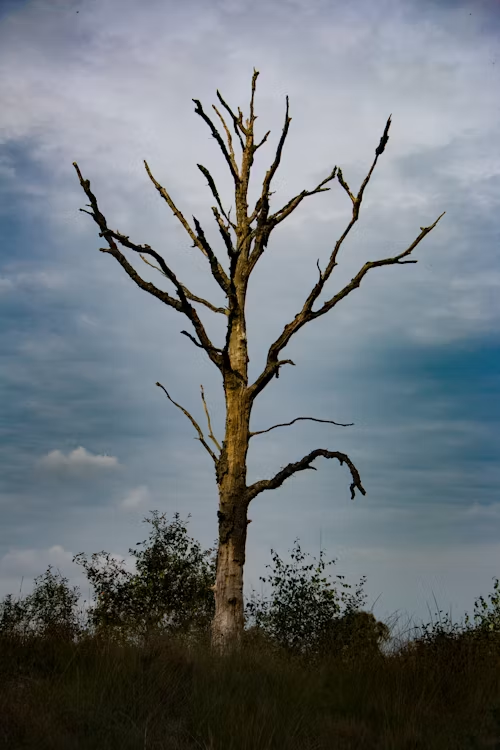
When a tree dies or begins declining, it can become a serious safety concern. Weak branches, internal decay, and unstable roots increase the risk of falling limbs or complete tree failure, especially during storms. Recognizing the warning signs early allows property owners to schedule a professional inspection before the situation becomes increasingly dangerous. At JSK Tree Care, we can identify dead and dying trees and safely remove them as needed. Here are four indications that a tree may be dead or dying and should be evaluated for potential removal.
Large Dead Branches Throughout the Canopy
Dead branches are often one of the earliest and most visible signs of a declining tree. Limbs that no longer produce leaves during the growing season may be dying or already dead. These brittle branches can break suddenly and create hazards for people, vehicles, and nearby structures. Extensive deadwood throughout the canopy often indicates significant overall decline.
Cracked or Peeling Bark
Healthy bark helps protect the tree from disease and pests. When large sections of bark begin cracking, peeling, or falling away, it may indicate internal decay. Deep vertical cracks in the trunk can weaken structural stability and increase the likelihood of failure. Trees showing severe bark damage should be professionally inspected.
Fungal Growth Near the Base
Fungal growth around the trunk or root area often signals internal rot or root decay. Fungi feed on decaying wood, which means the tree may already be structurally compromised. Root deterioration weakens the tree’s ability to remain stable and upright. An arborist can evaluate whether the tree remains safe or requires removal.
Leaning
A tree that suddenly begins leaning or appears unstable may have root damage or structural failure. While some trees naturally grow at slight angles, a noticeable change in position is cause for concern. Leaning trees are more vulnerable to falling during heavy winds and should be assessed promptly by a professional.
Tree Removal in Falmouth, MA
For
expert tree removal in Falmouth and the surrounding area,
contact JSK Tree Care at
774-506-4655. Feel free to give us a call to
arrange an arborist estimate in greater Falmouth, MA!